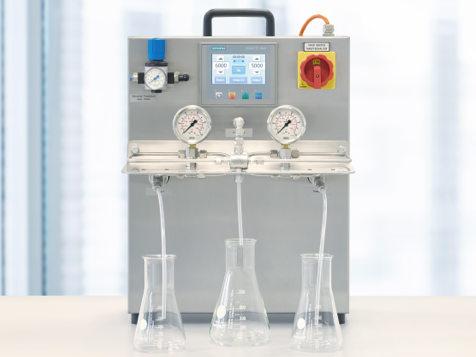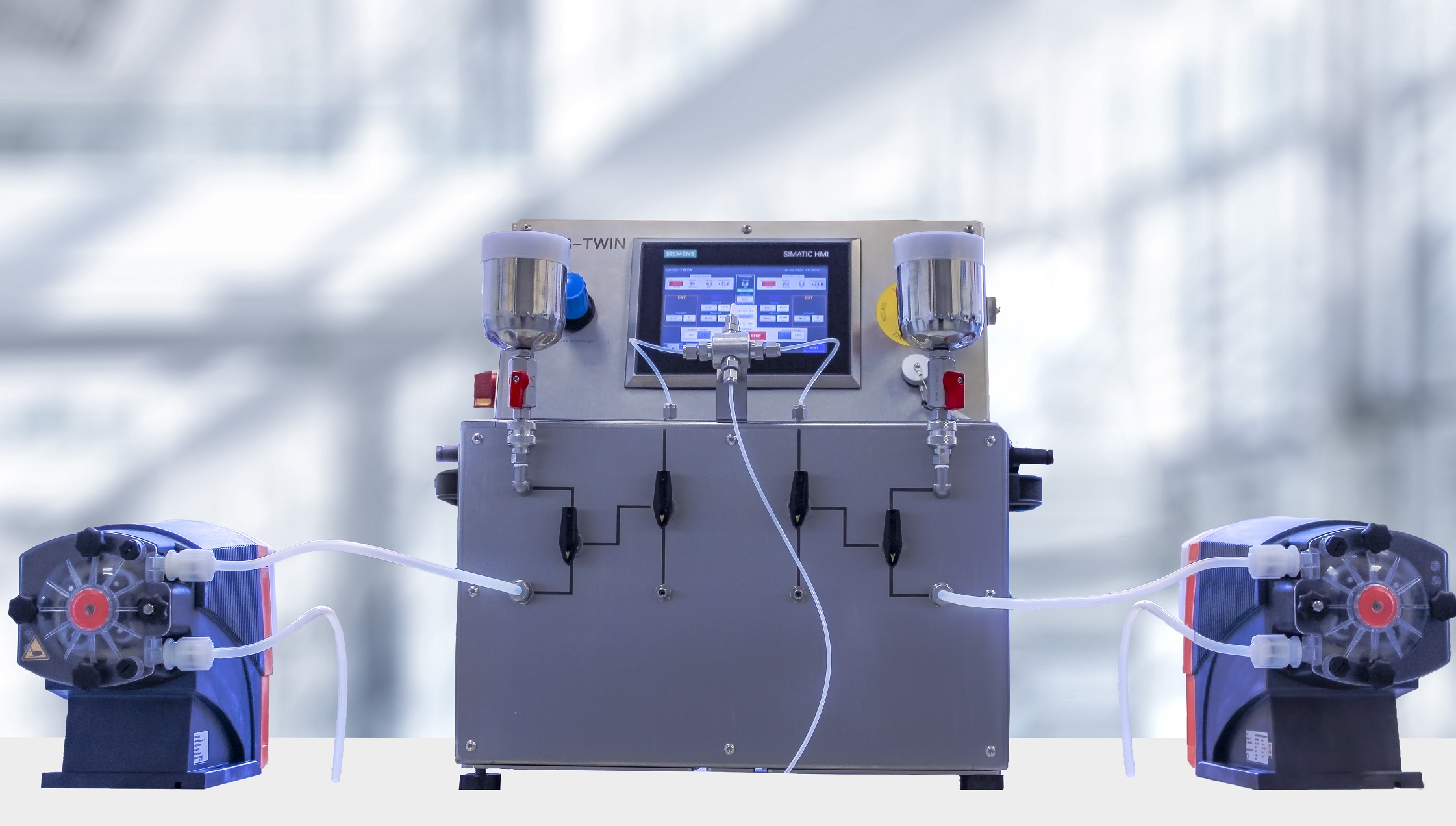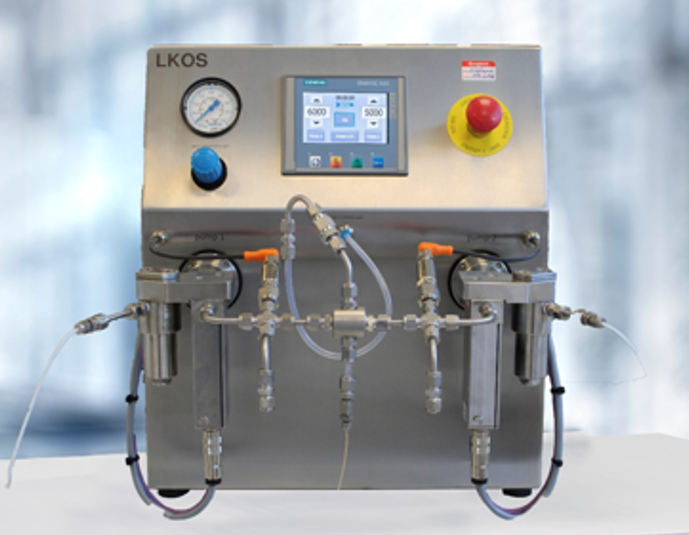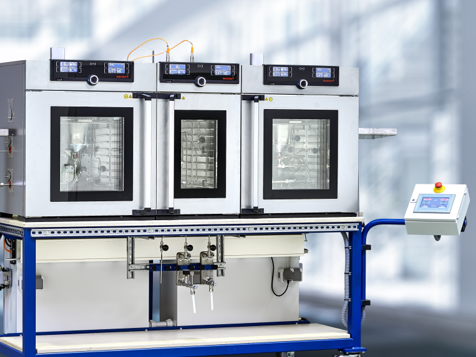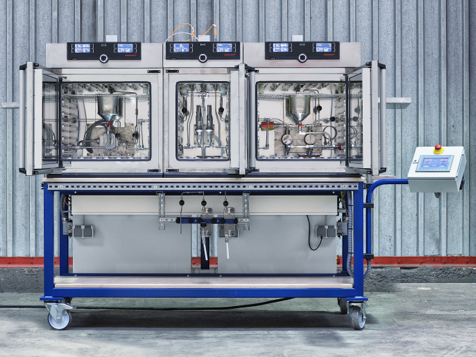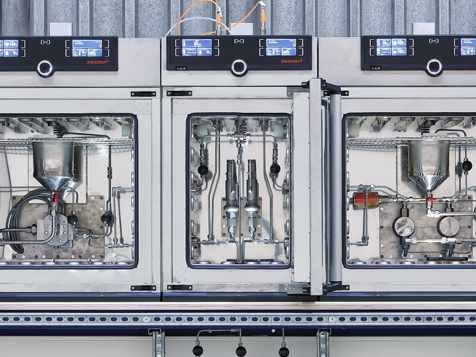
Most innovations in particle synthesis fail not because of the idea, but because of the physical and economic limits of outdated production methods. Our patented MicroJetReactor (MJR®) solves this at the source — replacing conventional batch processes with a precisely controllable continuous process that scales without compromise.
The transition of promising materials from laboratory to industrial production is one of the largest bottlenecks in the process industry. Sectors such as chemicals, paints, and construction materials still predominantly rely on traditional batch processes — even though they are difficult to reproduce, inherently produce quality variation, and make lab-to-production transfer error-prone.
Scale-up processes take up to 2 years. Every batch behaves differently. Long development times cost companies their decisive competitive advantage.
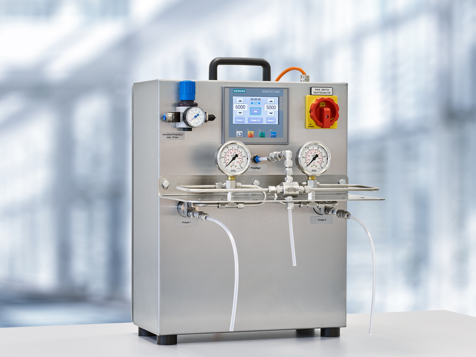
nanoSaar does not optimize existing methods. Instead, we replace the batch paradigm entirely with a precisely controllable continuous process at the micro-level — based on the patented MJR® technology.
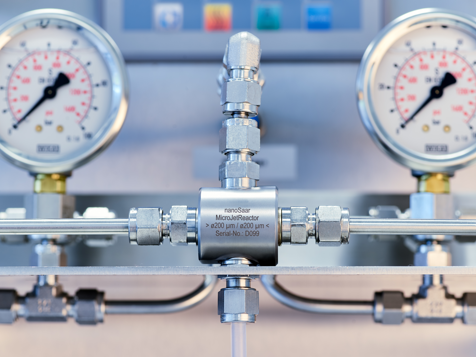
The technological centerpiece is the MicroJetReactor. Although only 3 cm long, it generates exceptionally high turbulence within a minimal footprint. In the compact mixing chamber, two fluid reactants are accelerated to velocities of up to 300 m/s and collide with such kinetic energy that complete mixing occurs in less than 1 millisecond.
This process enables the manufacture of nanoparticles, microparticles, emulsions, and encapsulated systems with precisely controlled particle sizes — consistently, across every run.
Mixing speed
Troughput per unit
Adjustable particle size
Polydispersity Index
Lower process costs compared to shear-force-driven conventional technologies — resulting in significant economic advantages. Overall savings exceeding 30% can be achieved through: reduced energy consumption, fewer maintenance intervals, CIP-based cleaning (lower personnel and cleaning agent costs), and on-demand production that eliminates unnecessary inventory.
Purely physical or chemical-kinetic MJR® processes produce highly homogeneous emulsions, precipitations, and encapsulations. No batch-to-batch variation. No reactor-dependent deviations. Consistent product quality from the first milliliter to multi-ton annual volumes.
Direct transfer of development results to production scale through identical reactor dimensions for laboratory and industrial purposes. Process parameter transfer from lab to production scale can be achieved within days — meaning shorter times to market and significantly greater returns on investment.
To increase production volumes further, multiple MJR® heads can be parallelized — taking output from 600 l/h with a single unit to over 10,000 l/h. Output quantities can be flexibly adjusted according to current production needs in a highly cost-effective manner.
Continuous MJR® processes result in a highly sustainable operation through waste minimization, improved resource management, and lower process costs. Less energy-intensive processes reduce both operating costs and CO₂ emissions simultaneously.
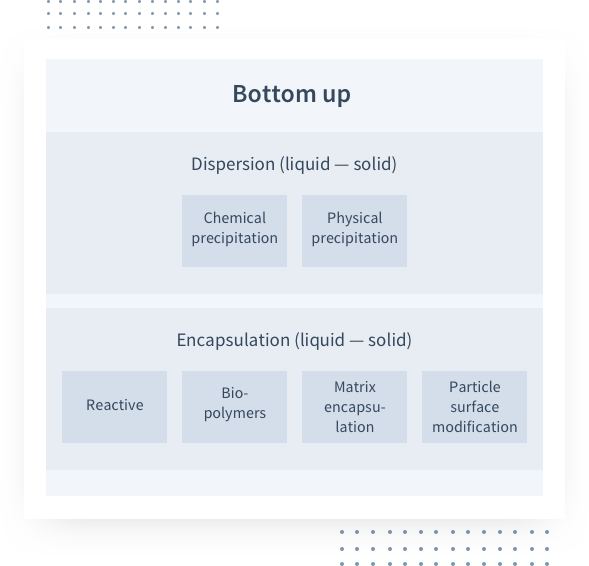
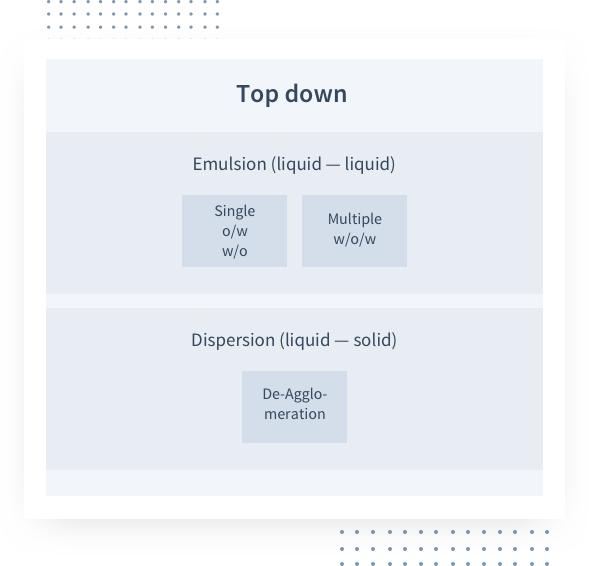
The MJR® technology can be used for bottom-up as well as top-down approaches in liquid-liquid and liquid-solid systems. It is already established across: paints & coatings, construction materials, corrosion protection, biocides, flame retardants, crop science, and medical diagnostics.